How to Prepare the Ground for Artificial Turf
Artificial turf lasts far longer than natural grass, but only if the base underneath is built correctly the first time. This guide covers how to prepare ground for artificial turf, from excavation through to a compacted, ready-to-lay base.
Key Takeaways:
- Artificial turf needs a compacted base, not conditioned soil, since the ground has to support the turf permanently without settling or holding water.
- Preparing ground for artificial turf means excavating to depth, laying a weed membrane, then building up compacted road base or crusher dust layers before the turf goes down.
- Skipping compaction is the most common reason artificial turf ends up uneven, spongy or prone to pooling water within the first year.
- Larger areas or ground with drainage issues usually need machinery to excavate and compact properly, rather than hand tools.
How Do You Prepare Ground for Artificial Turf?
Preparing ground for artificial turf means excavating the area, installing drainage falls, then building a compacted base of road base or crusher dust to support the turf long-term. Unlike natural lawn, there’s no soil conditioning involved, since the turf sits on a hard, compacted surface rather than living soil.
The main stages are:
- Excavation: Dig out to the required depth, usually 75 to 100mm for a standard residential base.
- Weed membrane: A geotextile membrane goes down to stop weeds pushing through.
- Base material: Road base or crusher dust is spread and compacted in layers.
- Levelling and falls: The surface is shaped to shed water rather than hold it.
What Are the Steps to Prep Ground for Artificial Turf?
Preparing ground for artificial turf follows a specific order, and each layer depends on the one below it being compacted properly. Rushing the base is the main reason artificial turf develops soft spots or uneven areas.
- Remove existing grass and topsoil: Strip the area down past the topsoil layer to expose a stable subgrade.
- Excavate to depth: Dig out to roughly 75 to 100mm to make room for the base layers.
- Shape falls for drainage: Grade the excavated area so water runs away rather than sitting under the turf.
- Lay a weed membrane: A geotextile fabric across the base stops weeds growing up through the turf.
- Spread the base material: Road base, crusher dust or a similar compactable material goes down in layers, not all at once.
- Compact each layer: Use a plate compactor or roller on each layer before adding the next, rather than compacting once at the end.
- Check levels: Confirm the finished base is even and matches the required height for the turf and any edging.
- Install edging: Timber, steel or plastic edging around the perimeter keeps the base and turf contained.
Compacting in stages rather than all at once is what stops the base from settling unevenly once foot traffic and rain hit it.
What Base Material Do You Need for Artificial Grass?
Most artificial turf installations use a compactable base like road base or crusher dust rather than sand or soil. The right material depends on your local ground conditions and drainage needs.
| Material | Best For | Notes |
|---|---|---|
| Road base | Standard residential areas | Compacts well, widely available |
| Crusher dust | Fine, smooth finish under turf | Good for areas needing a level, even surface |
| Decomposed granite | Free-draining sites | Suits areas with heavier rainfall or poor natural drainage |
Your local operator can confirm which material suits your soil type and drainage needs before the job starts.
How Is Preparing for Artificial Turf Different From Natural Turf?
Artificial turf prep builds a permanent compacted base, while natural turf prep improves the living soil underneath. The two processes share some early steps, like clearing and grading, but diverge once you get past the surface.
| Step | Natural Turf | Artificial Turf |
|---|---|---|
| Base layer | Conditioned, loosened soil | Compacted road base or crusher dust |
| Drainage | Falls shaped in soil | Falls shaped in compacted base, plus membrane |
| Amendments | Compost, fertiliser, pH correction | None, since there’s no living root system |
| Ongoing maintenance | Watering, mowing, feeding | Occasional brushing and rinsing only |
If you’re not sure which type of turf suits your yard, it’s worth weighing up water use, maintenance time and how the area will be used before committing to a base type.
What Equipment Helps With a Bigger Artificial Turf Base?
Small areas can be prepped with hand tools and a plate compactor, but larger backyards, sloped sites or heavily compacted ground usually need machinery to get the excavation depth and drainage falls right. Digging out a full backyard and moving several cubic metres of material by hand can quickly turn into a much bigger job than expected.
- Large or sloped areas: A mini excavator makes it easier to excavate and shape consistent levels and falls across the yard.
- Compacted or clay-heavy ground: Hard ground can be slow and physically demanding to excavate by hand.
- Significant base material volumes: A mini loader can help move and spread road base or crusher dust around the site.
- Old lawn removal: An excavator can strip existing grass and topsoil much faster than doing the entire area by hand.
- Base compaction: A plate compactor helps compact each layer before the next layer is added.
DIY or Get an Operator to Do the Machine Work
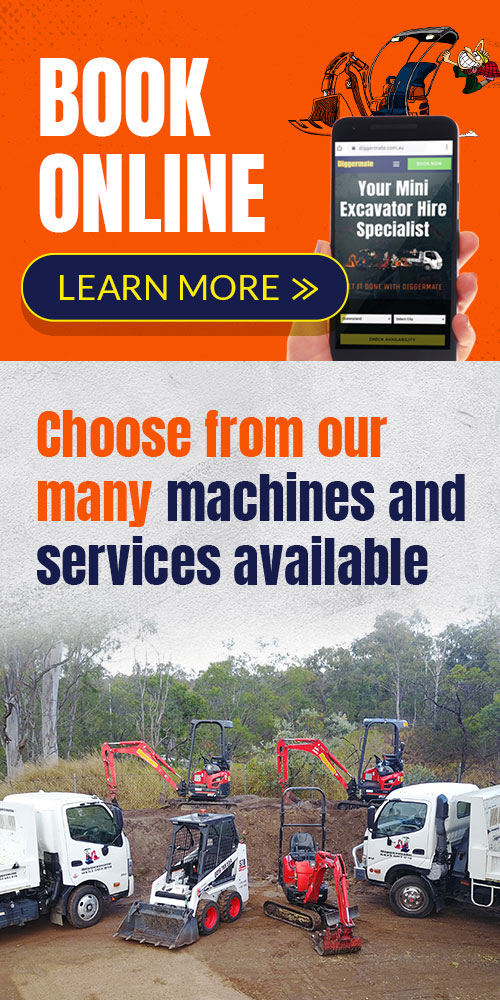
With Diggermate, you can tackle the ground preparation whichever way suits your project.
Want to DIY? Hire a mini excavator, mini loader or compaction equipment from your local Diggermate and take care of the excavation and ground preparation yourself. Our local team can help you work out what machine suits your job and access.
Rather have someone do the machine work? Hire a Diggermate machine with an experienced operator to take care of the excavation, levelling, base spreading and compaction required for your site.
Getting the base right is what determines whether artificial turf stays level and drains properly for years. Whether you want to hire the equipment and DIY or hire a machine with an operator, Diggermate can help you get the ground ready for your new turf.
Ready to get started? Find your local Diggermate and hire a machine or get a quote for a machine with an operator.